You replaced the battery in your Audi, BMW or Mercedes. The clamp fit, the car started, and the receipt is still in the glovebox. Then the first cold morning arrives and the crank is slow again, or a battery message shows up on iDrive or COMAND. On most late European cars, that is not a bad battery. It is a battery the car does not know about yet.
You had the battery in your Audi, BMW or Mercedes replaced, and within a few weeks the car acts like nothing changed. The crank is lazy on the first cold morning, start-stop has gone quiet, or a battery warning sits on the dash. Before you assume the new battery is faulty, it helps to understand one step that is easy to miss on a European car: registering the battery with the car itself. This guide explains what that step does, why skipping it shows up most in cold weather, how to tell whether it happened on your car, and what to ask whoever does the work.
Why a new battery can act weak after a swap
On most modern European cars the battery is not simply bolted in and forgotten. The car keeps a running estimate of how old and how healthy the battery is, and it adjusts charging to match. When a fresh battery goes in without anyone telling the car, that estimate carries over from the old battery. The car keeps compensating for a battery that is no longer there.
In practice this means the new battery can be charged harder than it needs, for longer than it should. Over weeks and months that extra stress shortens its life and eats into the reserve you count on for a cold start. The car may also hold back start-stop and some convenience features because, as far as it knows, the battery is still the tired one from last year.
So a new battery that feels weak early is not always a bad battery. It may be a good battery being managed as if it were an old one.
What the car's energy management system is doing
BMW, Audi, Mercedes, VW and Volvo fit a small sensor at the battery's negative terminal, usually called an intelligent battery sensor, or IBS. It measures current flowing in and out of the battery, along with voltage and temperature, and reports to the car's energy management module. From that data the car estimates state of charge and state of health, decides how much voltage the alternator should produce, and chooses when it is safe to shut the engine off at a light or to shed non-essential loads.
Two settings in that module describe the battery itself: its capacity in amp hours and its construction, meaning AGM, EFB or a conventional flooded battery. Different constructions want different charging voltages, which is why the type matters as much as the size. Registration resets the age and health counters so the car starts fresh. Coding updates the stored capacity and type when the new battery differs from the old one. On many cars both happen in the same scan-tool session, and people often say "registration" to mean both.
The battery type is not a detail you can bend. A car designed around an AGM battery expects an AGM in the tray, and a start-stop system with the battery in the trunk will not be happy with a conventional substitute even if the terminals line up.
How cold weather plays in
Cold exposes a marginal battery faster than anything else. A lead-acid battery, AGM included, delivers noticeably less current when it is cold, while the engine needs more current to turn over thick oil. A battery with full reserve shrugs that off. A battery that spent the summer being overcharged, or that was never the right type for the car, has less margin, and the first frosty morning is when the gap shows.
Cold also slows charging. Short winter trips with heated seats, lights and defrosters running may not put back what the start took out. The energy management system exists to manage exactly that balance, but it can only do it well when it knows which battery it is managing.
How to tell whether your battery was registered
There is no light that says "unregistered." But a few patterns after a recent battery swap are worth noting:
- Start-stop never came back. If the engine used to shut off at lights and has not done so since the swap, the car may still be treating the battery as worn out.
- A battery or charging message that appeared after the install and has not gone away on its own.
- Weak or slow starting within the first season, especially on cold mornings, from a battery that should be in its prime.
- The invoice says nothing about registration or coding. A plain swap and a registration are different jobs, and a receipt that lists only the battery is a hint.
None of these prove the step was skipped, and a weak crank can also be a starter or a drain. Together, though, they are a reason to have the car checked rather than wait for a no-start. Our post on how to tell if your Audi's battery needs replacing covers the earlier symptoms, and if the battery tests healthy and the crank is still slow, see symptoms of a faulty starter.
What to ask whoever installs the battery
Whichever shop you use, four questions get to the point:
- Is the new battery the type and capacity the car calls for? AGM for an AGM car, EFB for an EFB car, with a capacity that matches what the car was built around.
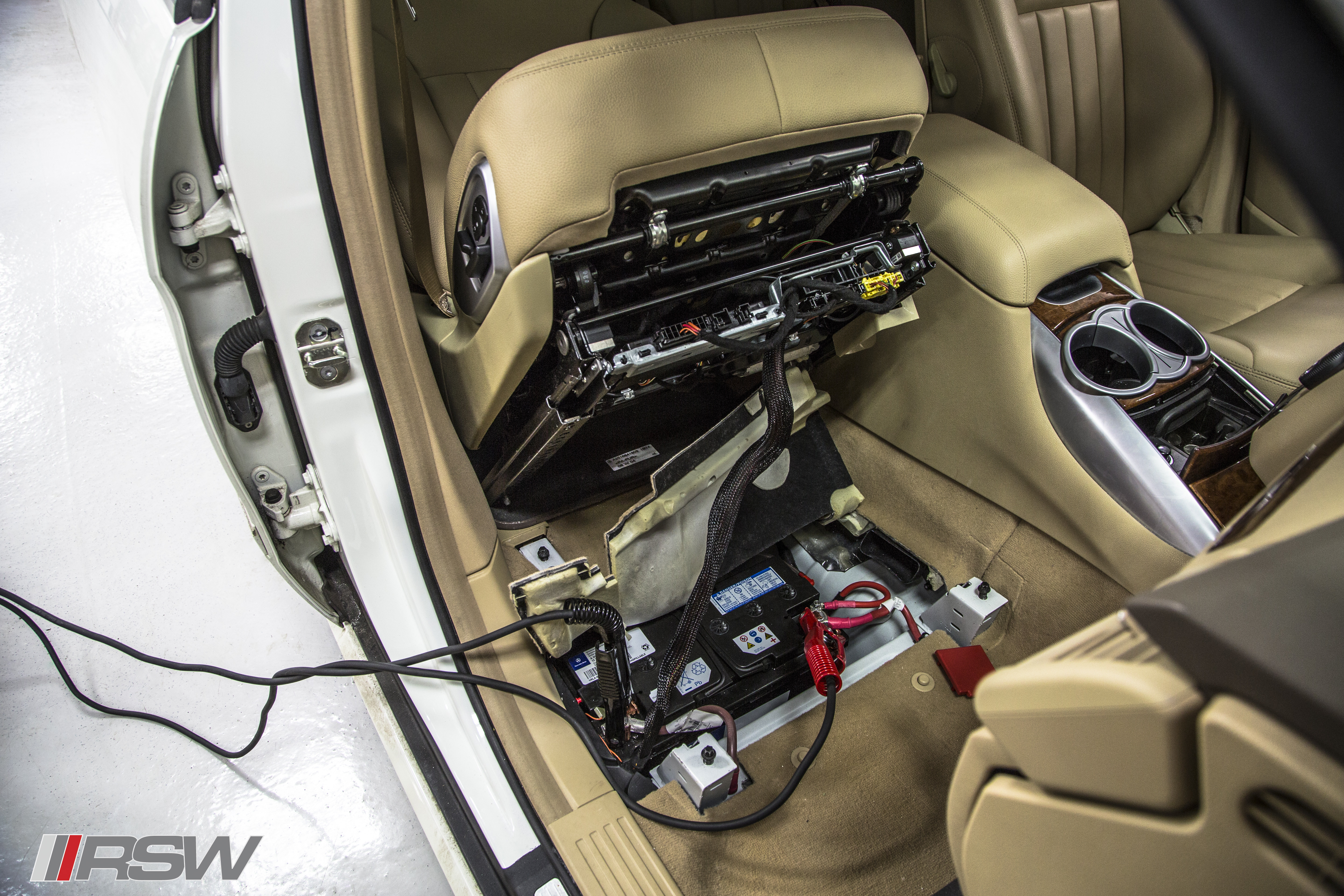
- Will you register it to the car, and code the capacity and type if they changed? This takes a scan tool that can talk to the car's energy management module.
- Did you look at why the old battery died? A battery that failed early, or that kept needing jumps, may have been pulled down by something staying awake after the car is locked. A new battery will not cure that. Our electrical system repair page describes that kind of diagnosis.
- Are the warnings gone? After registration, battery and energy-management messages should no longer be on the dash. If they are, something else is going on.
If the battery was already installed somewhere else and you are not sure it was registered, that step can be done on its own. Details are on our battery replacement page.
Frequently asked questions
Is registration the same as coding?
Not quite. Registration tells the car a new battery is in and resets its ageing data. Coding changes the stored capacity and type. If the new battery is identical to the old one, registration alone may be enough. If it is a different size or type, both are needed.
Does it still matter if the new battery is exactly the same as the old one?
Yes. Even with an identical battery, the car's record of age and wear carries over unless it is reset, so the new battery gets the charging behaviour meant for an old one.
Can I drive without registering it?
The car will run. The cost shows up later as shorter battery life, missing start-stop and, often, a weak winter. The step is small compared with the battery it protects.
Does registration fix a battery that has already been overcharged?
It stops the problem from getting worse, but it cannot restore capacity that is already lost. That is why it is worth doing promptly after a swap, not after the first dead morning.
Where to go from here
If your European car has had a battery swap in the last year and any of the signs above fit, have it tested and registered before winter settles in. RSW Euro handles AGM and EFB replacement, intelligent battery sensor registration, coding of capacity and type, and the parasitic drain check at both shops: 228 US-22 in Green Brook Township and 1167 Route 23 South in Kinnelon, Monday through Friday, 8:00am to 5:00pm. Service details and booking are on the battery replacement page, or call 908-223-7477 for Green Brook Township and 862-895-6200 for Kinnelon.